
Services
B2B Email Sequence Writing
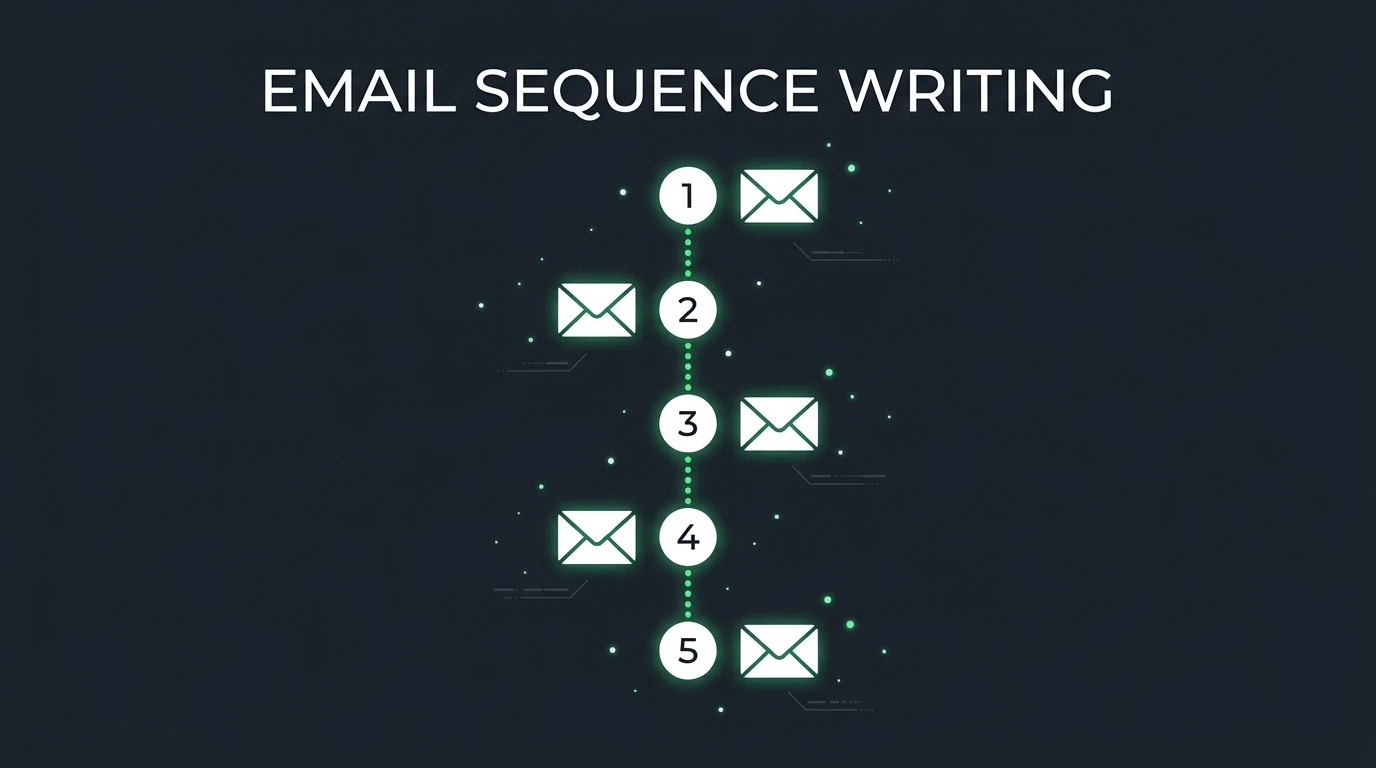
A great first email gets an open; a great sequence gets a meeting. We write multi-touch B2B email sequences designed around buyer psychology, timing, and urgency. We map out the exact touchpoints needed to turn a cold lead into a booked call, leveraging proven drip strategies. We stop the drop-off and keep the conversation alive.
The Shift That Matters
Why B2B Email Sequence Writing Matters
Most campaigns lose momentum after day one. If your follow-up just says "checking in," you are training buyers to ignore you. Sequence writing introduces new proof, new angles, and new urgency at every step. It is how you fix a low response rate.
Better follow-up flow
Each step has a job, which makes the sequence easier to test, refine, and improve.
Clearer buyer journey
A good sequence changes angle and pressure at the right times instead of repeating the same ask over and over.
Stronger response quality
The sequence gives more than one chance for the right buyer to engage when the timing becomes more favorable.
Challenges
What Problems B2B Email Sequence Writing Solves
This service solves the problem of one-step outreach and weak follow-up discipline. Many campaigns look like they have a lead problem when they really have a sequence problem. The buyer saw the first email, but the follow-up path gave them no new reason to respond.
Weak follow-up structure
A sequence works best when each segment has the right angle behind it. We align the follow-up flow with the intended audience, the offer, and the level of buyer awareness instead of repeating the same message six times.
What changes after the fix
Once this issue is fixed, the campaign becomes easier to read, easier to optimize, and much more commercially useful.
Low deliverability from poor sequence behavior
Bad follow-up behavior can create spam risk. We structure the sequence to stay useful and consistent without pushing the inbox too hard or creating unnecessary repetition.
What this protects
Fixing this issue protects reply quality, inbox health, and the overall conversion path from first touch to booked call.
How We Improve Results With B2B Email Sequence Writing
Sequence structure affects results because timing, angle progression, and call-to-action pressure all shape how the prospect experiences the campaign. Better structure creates better odds of a useful reply and a more informed sales conversation later.
Better pacing
The sequence should feel intentional across multiple touches instead of rushed, random, or repetitive.
More message variation
Each step should add a new reason to respond rather than recycling the same language with cosmetic edits.
Cleaner testing
Structured steps make it easier to see which angle, CTA, or timing change is actually improving results.
What Is Included
What Is Included In Our B2B Email Sequence Writing Service
We map the entire buyer journey. This includes the initial hook, the value-driven follow-ups, the soft breakups, and the exact timing between each touch. We ensure your copy builds a cohesive commercial argument.
Strategy and setup
We define step order, angle progression, timing, CTA logic, and message pressure before the campaign launches so the sequence has a reason behind each touch.
Execution and optimization
We write the sequence, test its performance, and refine underperforming steps based on reply data, objection themes, and audience behavior. That often includes subject-line tests, CTA tests, and step-by-step adjustments inside Instantly, Smartlead, or HubSpot workflows.
Reporting and handoff
We identify which steps convert, where prospects drop off, and what message changes support better sales conversations once interest appears.
Best Fit
What A Good Sequence Should Feel Like
A good sequence should feel deliberate, not pushy. It should introduce the problem clearly, reinforce relevance, and create a reasonable reason to reply. Each message should add something instead of just asking again with slightly different wording.
Most common mistake
The most common mistake is writing six versions of the same email and calling that a sequence.
Business Impact
How Sequence Structure Affects Results
Sequence writing matters because most replies do not happen on the first touch. The full series needs to feel deliberate, easy to process, and commercially useful across several messages instead of relying on one opening line to carry everything.
More disciplined follow-up
A written sequence prevents the campaign from falling into random follow-up. Each message has a role, which makes the outreach feel more intentional and easier to optimize.
Less repetition fatigue
Weak sequences repeat the same angle several times. Stronger sequence writing changes the framing, proof, and call to action so the outreach keeps earning attention instead of becoming background noise.
Better fit for buyer timing
Some prospects need a simple first-touch angle. Others respond after a clearer problem statement or proof point later in the sequence. Good sequence writing respects that timing reality.
Clearer message testing
When each step has a defined purpose, it becomes easier to identify which touches are helping and which ones are adding clutter. That improves optimization over time.
Specific Use Cases
Where Sequence Writing Changes the Outcome
This service is critical when you have one decent email but your follow-up lacks pacing, logic, or a compelling reason to reply.
Teams with one strong opener and weak follow-up
Many campaigns have a serviceable first-touch email but lose momentum after that because the next steps repeat the same angle without adding context or urgency. This can cause a low response rate.
Longer buying cycles that need more timing control
A sequence matters more when buyers are busy, skeptical, or not ready on day one. The campaign needs drip strategy logic, not just more send volume.
Offers needing several proof angles
If the sale can be framed around pain, ROI, risk, or delegation, sequence writing helps spread those angles across touches instead of cramming them into one message for high-level buyers.
Related Pages
Helpful Pages After Sequence Writing
These pages help if the next problem is personalization, automation, or overall strategy around how the sequence should behave.