
Strategy
Cold Email Best Practices
What improves replies and conversions in cold email campaigns.
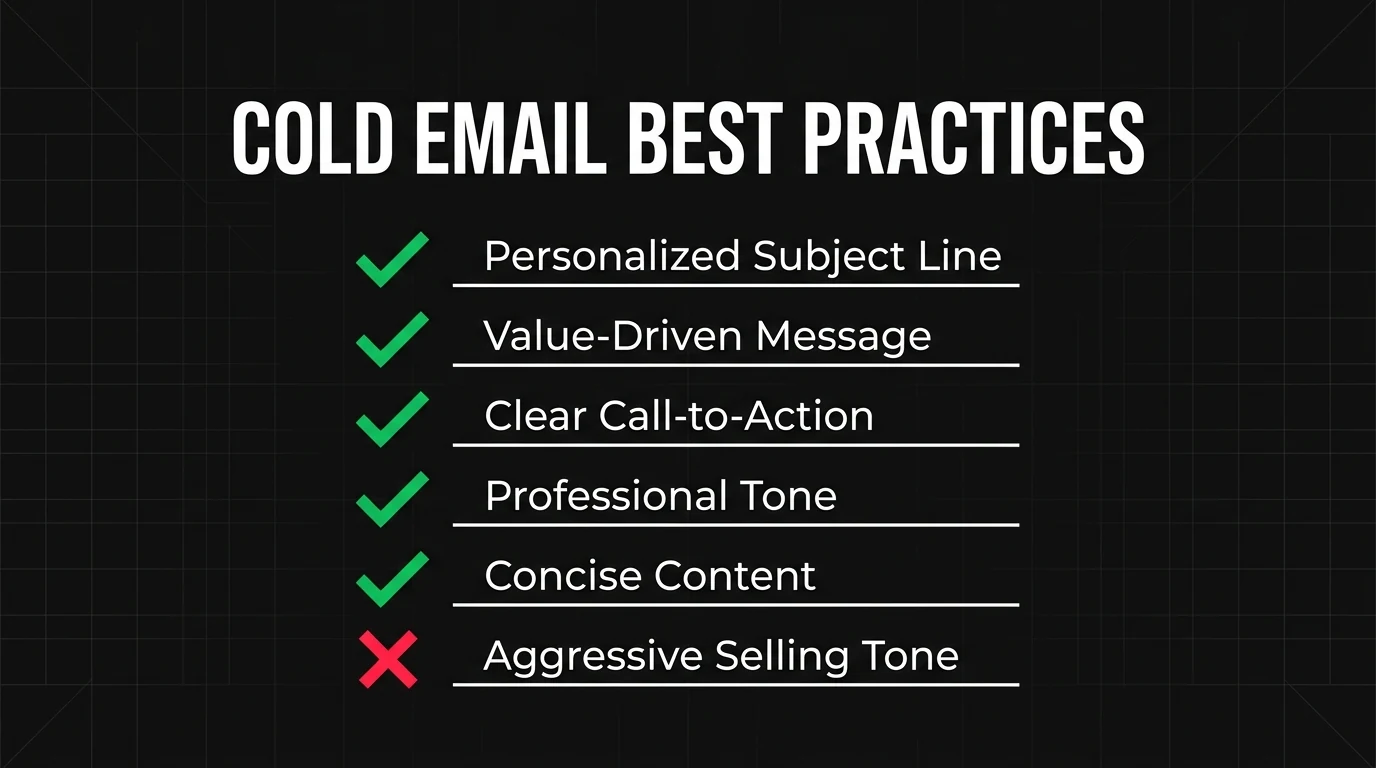
Cold email best practices balance relevance, technical discipline, and message simplicity so the campaign earns attention without creating avoidable risk. That usually ties this page directly to deliverability work, copywriting, and the live diagnosis pages for low response rate and spam placement.
Core Framework
The Framework Behind Cold Email Best Practices
A good cold email best practices is not one isolated tactic. It is a structured operating model. The framework usually combines targeting, infrastructure, message sequencing, testing, and CRM handoff so the campaign can create reliable healthier campaigns and more qualified responses.
Audience definition
The first layer is deciding who should receive the campaign and which segments deserve different messages. Weak segmentation usually makes every later tactic look worse than it really is.
Message structure
The second layer is the messaging system: hooks, sequencing, CTA logic, and positioning. That structure needs to reflect the best cold email practices balance relevance, technical discipline, and message simplicity so the campaign earns attention without creating avoidable risk..
Measurement loop
The last layer is how the team learns from the market. The strategy should be judged against healthier campaigns and more qualified responses, not just simple activity metrics.
Key Principles
What Makes This Strategy Work
The best campaigns follow a small number of durable principles. They stay relevant to the buyer, they keep the structure clear, and they make testing easier instead of adding noise.
Relevance before volume
The strategy works better when the message and the market fit each other tightly. That usually matters more than pushing more volume into a weak audience. In this area, entities like SPF, DKIM, DMARC, subject lines, preview text, CTA structure, Apollo, Instantly, and CRM tracking often make the message more believable.
Why this matters
Good strategy works when the campaign is built on sound sequencing, sound targeting, and infrastructure that can support the volume safely.
Systems before tricks
Good performance usually comes from sound systems: safe sending, clean prospect data, sequence testing, and reply qualification. That is more dependable than relying on one clever line, one subject line pattern, or one send-time guess.
What this improves
When this principle is handled correctly, testing becomes cleaner, reporting becomes more useful, and the campaign becomes easier to scale responsibly.
How To Execute Cold Email Best Practices Well
The execution side of strategy is where most teams drift. They may understand the idea, but they do not translate it into a stable campaign system. The strongest programs operationalize the strategy through clear steps, clear ownership, and clear reporting.
Protect inbox placement first
Best practices start with sender health. Review SPF, DKIM, DMARC, mailbox setup, warmup, and list hygiene before pushing volume or testing aggressive copy angles.
Keep the message simple and specific
Good cold emails are easier to process. They name the buyer problem clearly, keep the CTA light, and avoid hype, clutter, or over-explanation that makes the email feel mass produced.
Use controlled testing
Test one meaningful variable at a time, such as segment, subject line, CTA, or sequence angle. That keeps the feedback loop readable and helps the team learn faster from actual campaign behavior.
Practical Checklist
What To Check Before You Scale Cold Email Best Practices
Before increasing volume, confirm the basics are stable. That usually includes authentication, list verification, message clarity, CTA quality, and meeting-quality review. If those elements are weak, scaling tends to magnify the problem rather than improve performance. It usually helps to start with a technical audit.
Quick audit focus
Inspect the strategy as a system, not a single metric. That means reviewing audience quality, message quality, sequencing, workflow logic, and the CRM handoff together before deciding what to change next.
Common Mistakes
Common Cold Email Best Practices Mistakes
Most failures in this area do not come from lack of effort. They come from avoidable mistakes in planning, segmentation, sequencing, and measurement. Those issues make the strategy look weaker than it should.
Overgeneralizing the audience
A strategy weakens quickly when several buyer types receive the same message without enough segmentation or context.
Ignoring the technical layer
Teams often talk about strategy while forgetting that deliverability, sender health, and list hygiene shape whether the market even sees the message.
Measuring the wrong things
If the program is judged only by sends or opens, the team can miss whether it is creating healthier campaigns and more qualified responses.
Changing too many variables
Random testing makes strategy harder to read. Controlled testing works better because it keeps the feedback loop cleaner and more useful.
Turn Strategy Into Execution
Best Next Pages After Cold Email Best Practices
Use these pages to move from strategy into services, tools, industry examples, and the exact problems that usually connect to this topic.