
Tools
Best Cold Email Tools
The best cold email tools are usually a stack, not one product.
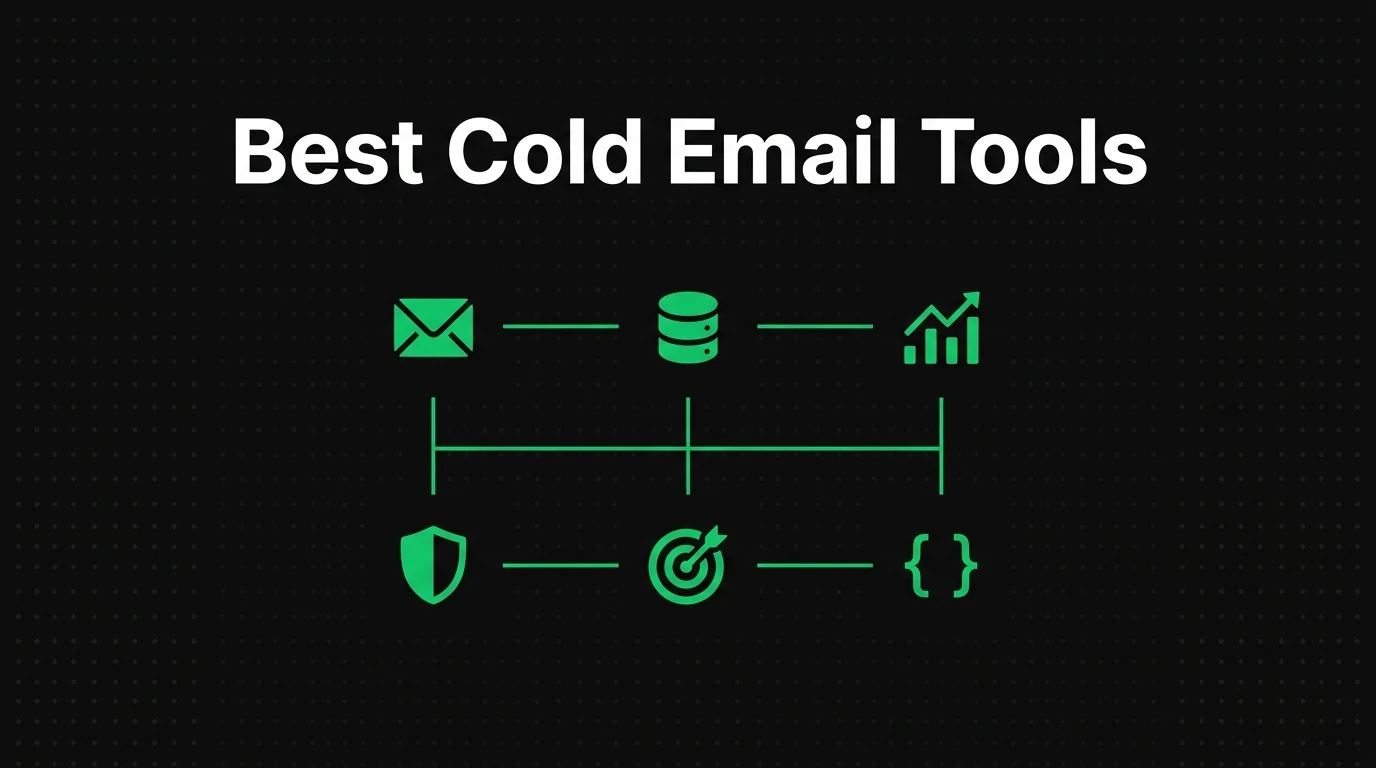
Most outbound teams need at least four layers working together: prospect data, enrichment, sending, and CRM handoff. The best tool choice depends on where your bottleneck sits today, not on which brand is loudest. For example, one team may need Apollo plus Instantly because data and sending are the main problem, while another may need Clay between Apollo and Smartlead because enrichment and segmentation are the real gap. If you already know which layer is weak, the next pages are usually B2B Email List Building, Email Deliverability Services, and Outbound Campaign Management.
Best Picks
What Usually Belongs In A Strong Stack
The strongest cold email stack usually combines different tool types instead of forcing one platform to do everything badly.
Data layer
Tools like Apollo or ZoomInfo are usually chosen for prospect data, basic enrichment, and account discovery. For example, this layer may answer "who are the right RevOps managers at 100 to 500 employee SaaS companies?"
Workflow and enrichment layer
Tools like Clay matter when the team wants more control over waterfalls, field logic, segmentation, and personalization inputs. For example, Clay can combine CRM data, LinkedIn signals, and enrichment fields before the records ever hit the sequence.
Sending layer
Tools like Instantly or Smartlead usually handle sequence delivery, mailbox operations, and outbound campaign management. For example, this is the layer that actually sends the cold email and controls mailbox pacing.
Decision Criteria
What To Evaluate
Most bad stack decisions come from comparing tools by features instead of by the job each tool is meant to do.
Role clarity
Every tool should have a clear role. If two tools overlap heavily, the stack becomes harder to manage and more expensive than it should be.
Workflow fit
Choose tools based on how your team prospects, enriches, sends, and reports, not on how another team runs its system.
Reporting path
The stack should end in useful CRM visibility, not just tool-level activity dashboards.
Stack Logic
How To Build The Stack In The Right Order
Start with the bottleneck. If data quality is the issue, solve that first. If sending operations are messy, fix the sending layer first. If the campaign is blind after replies arrive, fix the CRM handoff and reporting path first. For example, a team with strong reply volume but poor CRM visibility probably does not need another data vendor first. It needs cleaner handoff and reporting.
Simple rule
Do not buy another platform until you know which layer of the stack is actually failing.
Common Buying Mistakes
The worst stack decisions usually come from overbuying and under-defining the workflow.
Too many overlapping tools
Several platforms may claim to help with prospecting or sending, but overlap usually creates noise instead of leverage.
No clear ownership
If nobody knows which tool owns enrichment, sending, or CRM handoff, the workflow breaks between systems.
Buying before diagnosing
A stack gets expensive fast when the team keeps buying software before it knows where the real bottleneck is.
Ignoring the sales handoff
A tool stack is incomplete if the output never becomes usable pipeline inside HubSpot or Salesforce.
Use Cases
Where Best Cold Email Tools Gets More Useful
These cards make the list page more specific by showing which teams, workflows, and buying situations change the right pick.
Data bottleneck first
If data quality is weak, move first into list building and Apollo vs ZoomInfo.
Sending bottleneck first
If the mess is operational, compare the stack against Instantly vs Smartlead and the wider campaign-management layer.
Deliverability bottleneck first
If the stack looks fine but inbox placement is weak, the next stop is usually Email Deliverability Services.
Related Pages
Best Next Pages After Best Cold Email Tools
Use these pages to move from this tool category into the matching strategy, service, problem, or comparison page.